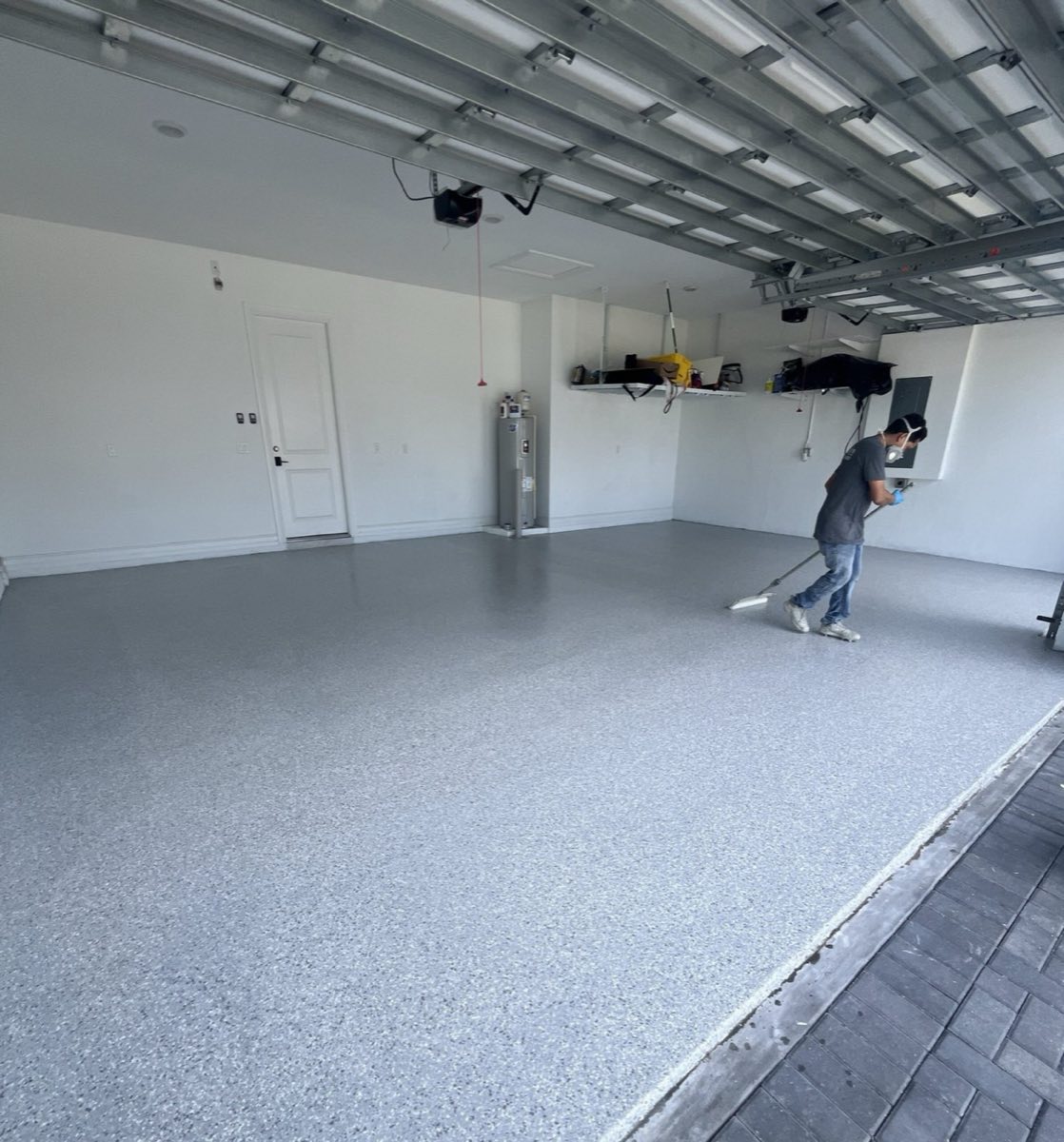
Pembroke Pines sits on drained wetland with a shallow water table, and the summer humidity keeps slabs moisture-active for months. That defeats a lot of epoxy floors, especially in kitchens and wash-down rooms where heat and water pile on. Urethane cement is the fix: it flexes with thermal movement, shrugs off boiling water and chemicals, and tolerates a moisture-active or even green slab far better than epoxy. It belongs in commercial kitchens, food and beverage facilities, warehouses, and mechanical rooms. Call (786) 488-5057.
Why Pembroke Pines Is Hard on Floors
Two things about this city work against a floor coating, and both come back to water. First, Pembroke Pines was built on drained wetland, so the water table runs shallow across much of the west Broward area. Second, the summer wet season keeps the air and the ground saturated for months at a stretch. Together they mean a lot of slabs here are moisture-active for a big part of the year, quietly pushing vapor upward whether you can see it or not.
For a residential garage, that is a manageable problem we handle with a moisture test and a vapor-barrier primer. But in a commercial kitchen or a wash-down facility, where heat and constant water pile on top of the ambient humidity, the demands multiply. That is the environment where a standard epoxy struggles, and where urethane cement stops being optional and becomes the only system that really holds.
The calendar matters here as much as the slab does. From roughly June through the tail of hurricane season, the Pembroke Pines air stays heavy for weeks at a stretch, and a slab that reads dry in the cooler months can turn moisture-active again once the wet season settles in. That seasonal swing is the trap a lot of floors fall into. A coating that went down fine in a dry March can start telegraphing vapor blisters by August, because the conditions that defeat it were not present the day it was installed. We plan around those windows deliberately, testing the slab for what it will do in the wet months, not just what it reads today, and speccing the system for the worst the climate throws rather than the calm stretch we happen to be standing in. On a kitchen or a wash-down floor, that forward planning is the whole difference between a floor that lasts and one that fails on the first humid summer.
What Urethane Cement Actually Is
Urethane cement is not just a thicker epoxy. It is a cement-based flooring system, and that difference in chemistry is the whole reason it survives conditions that break other coatings. Epoxy is rigid and bonds to a dry, cured slab. Urethane cement is designed to flex with the slab and tolerate moisture, so it does not crack or debond when a floor gets hit with heat, steam, and water day after day.
It can also be troweled at real thickness, which lets it absorb the impact a busy commercial floor takes and lets us build integral cove bases where the floor meets the wall for sanitation. And it finishes with an aggressive slip texture where wet-floor safety is a legal and practical requirement. That combination, moisture tolerance, thermal resistance, thickness, and grip, is exactly what a food or industrial operation in a humid climate needs.
Heat and Chemicals Meet Their Match
Walk into any busy restaurant kitchen and watch the floor take abuse: boiling water sloshed from a pot, steam venting off the line, hot oil spattering off the fryer, acidic cleaners scrubbed in every night. That regimen destroys a rigid epoxy, which blisters when it takes thermal shock and softens when the chemistry gets aggressive.
Urethane cement absorbs all of it. The thermal shock that would delaminate an epoxy just passes through a floor that expands and contracts with the slab. The acids, food oils, cleaning agents, and solvents wipe off instead of eating in. That resistance is what keeps a food-prep or industrial floor sanitary and structurally sound through years of daily wash-downs, which is why it is our go-to for the harshest Pembroke Pines environments.
The Moisture Advantage That Matters Here
This is the point that matters most in Pembroke Pines specifically. Urethane cement tolerates moisture-active slabs, and even green or newly poured slabs, far better than epoxy. In a place where the water table is shallow and the humidity keeps slabs damp for months, that tolerance is a genuine advantage, not a technicality.
It means fewer moisture-related failures, a faster path to a floor that lasts, and the ability to work on a slab that an epoxy contractor would have to turn away or gamble on. We still test the slab and prep it correctly, because doing it right always produces the best result, but urethane cement gives us a much wider margin in exactly the conditions that make this part of Broward tough on floors.
Where It Belongs in Pembroke Pines
The best fits are the harshest environments. Commercial kitchens along the Pines Boulevard corridor top the list, food-safe, grease-resistant, thermal-shock-proof floors with a slip texture for a wet, hot line. Food and beverage facilities near Sheridan Street come next, prep rooms, coolers, and processing floors that get sanitized and hosed daily.
Warehouses and cold storage in the southwest Broward industrial pockets are strong candidates too, with heavy wheeled traffic, temperature swings, and occasional chemical exposure that a thick urethane cement build absorbs. And mechanical and utility rooms, boiler rooms, plant floors, and back-of-house spaces that see solvents and heat, round out where it earns its place. Anywhere the environment would chew through something softer, urethane cement is the answer.
The industrial pockets branching off Pines Boulevard and down toward the county line are exactly where this system does its quiet work. A commissary kitchen that supplies a chain of restaurants, a beverage bottler, a bakery running ovens all night, a cold-storage room cycling from freezing to room temperature every time a door opens, these are the Pembroke Pines operations that grind through a coating fastest and notice a floor failure hardest. In those settings a shutdown is not a cosmetic inconvenience, it is lost product and a failed inspection. Urethane cement is the floor that keeps those rooms running, and because it tolerates the moisture-active slabs this part of Broward is full of, we can often bring one of these facilities back into service on a slab an epoxy contractor would have refused to touch. When the operation cannot afford to gamble on the floor, this is the system we reach for.
Where Our Background Helps
Urethane cement is a lane a lot of epoxy contractors skip, and it is one we deliberately own. Suncrete grew out of a decade of high-finish surface work, and our urethane cement systems are food-safe and built for commercial kitchens and food-processing facilities, the exact settings where a floor is a health-code requirement, not a cosmetic choice. We know how to detail the coves, set the slip rating, and meet the sanitation standards an inspector looks for.
We also know how to work around a live operation. A kitchen or plant cannot go dark for a week, so we schedule the install around your slowest windows, using off-hours and phased sections wherever possible. You lose as little time as the job allows, and you come back to a floor built to disappear from your list of problems for years.
Getting the Right System Specced
Not every floor needs urethane cement, and part of our job at the walkthrough is telling you when it does not. For a retail floor or an office, it is overbuilt, and a commercial epoxy is the better value. For a kitchen line, a wash-down room, or an industrial slab in this humid climate, it is the system that actually lasts. We match the build to the environment, not to a one-size sales pitch.
If you run a Pembroke Pines kitchen, plant, or facility where heat, chemicals, and moisture are wearing out your floor, the walkthrough and the quote are free. Share your square footage, your environment, and the hours you can give up, and we return a real number in 24 hours. Call (786) 488-5057 and we will spec the floor to your space.
Pembroke Pines Polyurethane Floor FAQ
How is urethane cement different from epoxy?
Epoxy is a rigid coating that bonds to a dry slab, great for garages, retail, and decorative floors. Urethane cement is a cement-based system that flexes with heat and tolerates moisture, so it survives kitchens, wash-down rooms, and industrial floors that would blister an epoxy.
Why does it work better in Pembroke Pines humidity?
Urethane cement tolerates moisture-active and even green slabs far better than epoxy. In a place with a shallow water table and months of summer humidity, that tolerance means fewer moisture failures and a floor that lasts where an epoxy might lift.
Is it safe for a commercial kitchen?
Yes. Our urethane cement systems are food-safe and approved for commercial kitchens and food-processing facilities, with slip textures and integral cove bases formatted to meet the sanitation and safety standards a health inspector looks for.
Can it really handle boiling water and hot oil?
It can. Urethane cement is thermal-shock resistant, so steam, boiling water, and hot-oil spills that would delaminate an epoxy do not break the bond. The floor moves with the slab through temperature swings instead of cracking.
Can you install without shutting my kitchen down?
We schedule around your operation, using off-hours and phased sections wherever possible so a Pembroke Pines kitchen or facility loses as little time as it can. We map the plan to your slowest windows at the walkthrough.
Got a tough floor in Pembroke Pines?
Square footage plus your environment equals a real quote in 24 hours. Suncrete Coatings installs polyurethane floors for kitchens and plants across Pembroke Pines.
Resurface My Floor → Call (786) 488-5057