Miami Polyurethane Floors.
The urethane topcoat that keeps a coated slab from going yellow, chalky, or soft after a couple of Miami summers. Sun, citrus, degreaser, hot tires.
- Service
- Polyurethane Flooring
- Coverage
- Miami + greater Miami-Dade
- Walk-on
- 24 hours after final coat
- Service
- 48 hours after final coat
- Lead time
- Same-week walk-through
- Quote
- (786) 488-5057
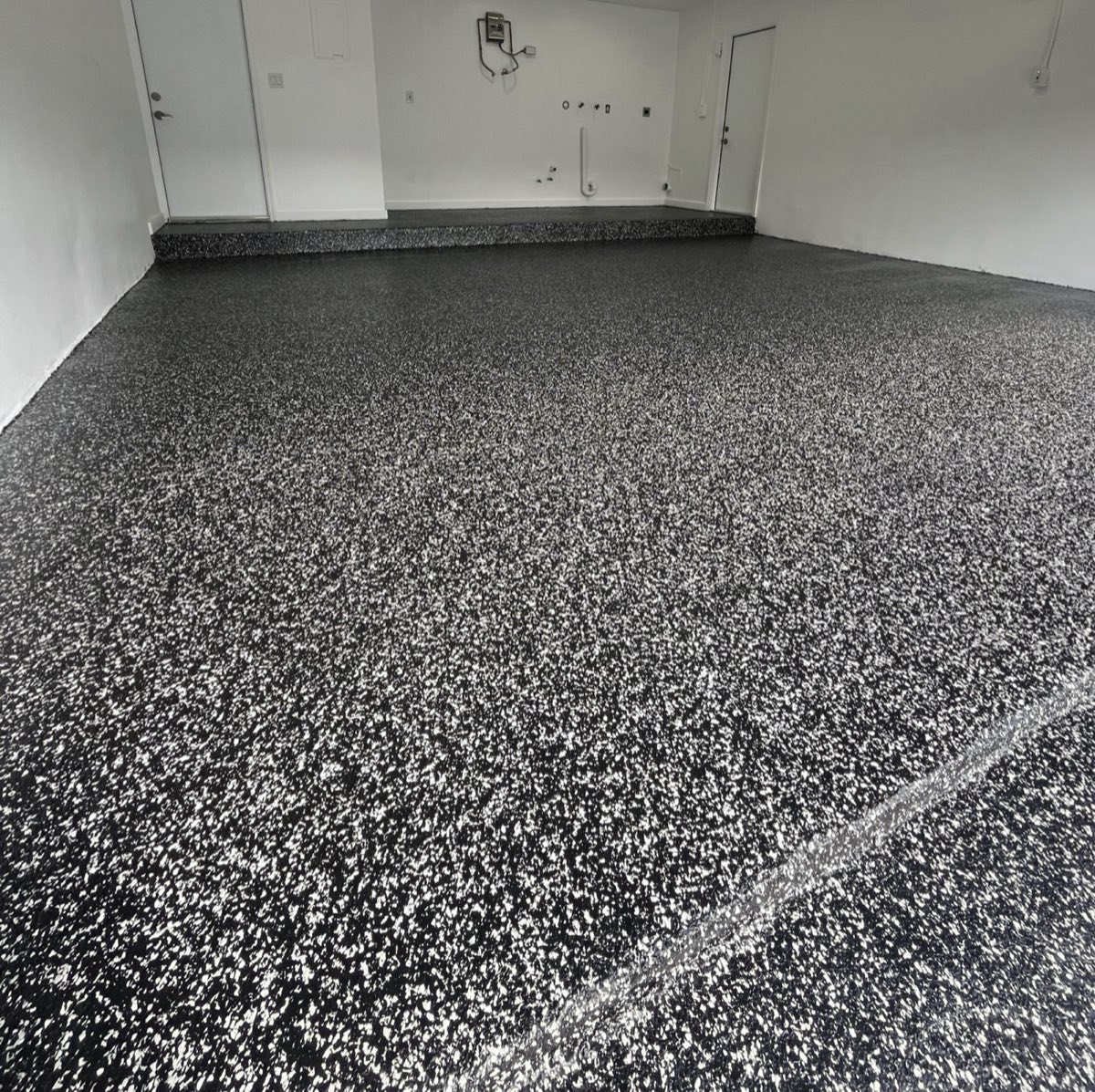
What a urethane topcoat adds over epoxy.
Epoxy is the body of a coated floor. It bonds hard to prepped concrete, fills, and builds thickness. What epoxy does not do well is live in direct sun. Ultraviolet light breaks down the resin at the surface, and the first thing a homeowner notices is the color shifting amber, then a dull chalk that rubs off on a shoe. On a shaded interior slab that never matters. On a Miami carport, a Coconut Grove terrace, or a garage with the door open half the day, it matters within a season or two.
Polyurethane is the answer to that. It goes on as the wear layer over the epoxy body, and the chemistry that makes it different is aliphatic urethane, which holds its color under UV instead of surrendering to it. That single change is why a floor still looks like the day it was finished after several Florida summers. The topcoat also brings a harder, tighter surface that resists scuffing and takes a specific gloss level, from a low satin that hides dust to a full gloss that reads wet.
The second gain is chemical. Urethane shrugs off things that etch or soften a bare epoxy surface: citrus acid, wine, brake cleaner, degreaser, pool chemistry, and the strong sanitizers a commercial kitchen uses at close. The third gain is flexibility. A Miami slab is not a static object. It takes on heat all afternoon and gives it back at night, and a carport slab in full sun moves measurably more than the shaded floor inside the house. A rigid film argues with that movement and eventually loses at a control joint. Urethane has enough give to ride it.
Coverage across Miami.
We work throughout the City of Miami, from Coconut Grove and the Coral Way corridor to Wynwood, Little Havana, Brickell, and the waterfront properties along Biscayne Bay, plus the rest of Miami-Dade.
Where a Suncrete urethane topcoat earns its keep.
Holds color in direct sun
Aliphatic urethane keeps its tone where epoxy ambers and chalks. That is the difference between a carport that still looks finished in year five and one that looks tired by the second summer.
Takes citrus and cleaners
Lime and lemon acid, wine, degreaser, brake cleaner, and closing-shift sanitizer all land on Miami floors. Urethane resists the etching and softening that would dull a bare epoxy surface.
Flexes with a hot slab
A sun-loaded slab expands through the afternoon and contracts overnight. Urethane has the give to ride that cycle instead of telegraphing it as a hairline crack along a joint.
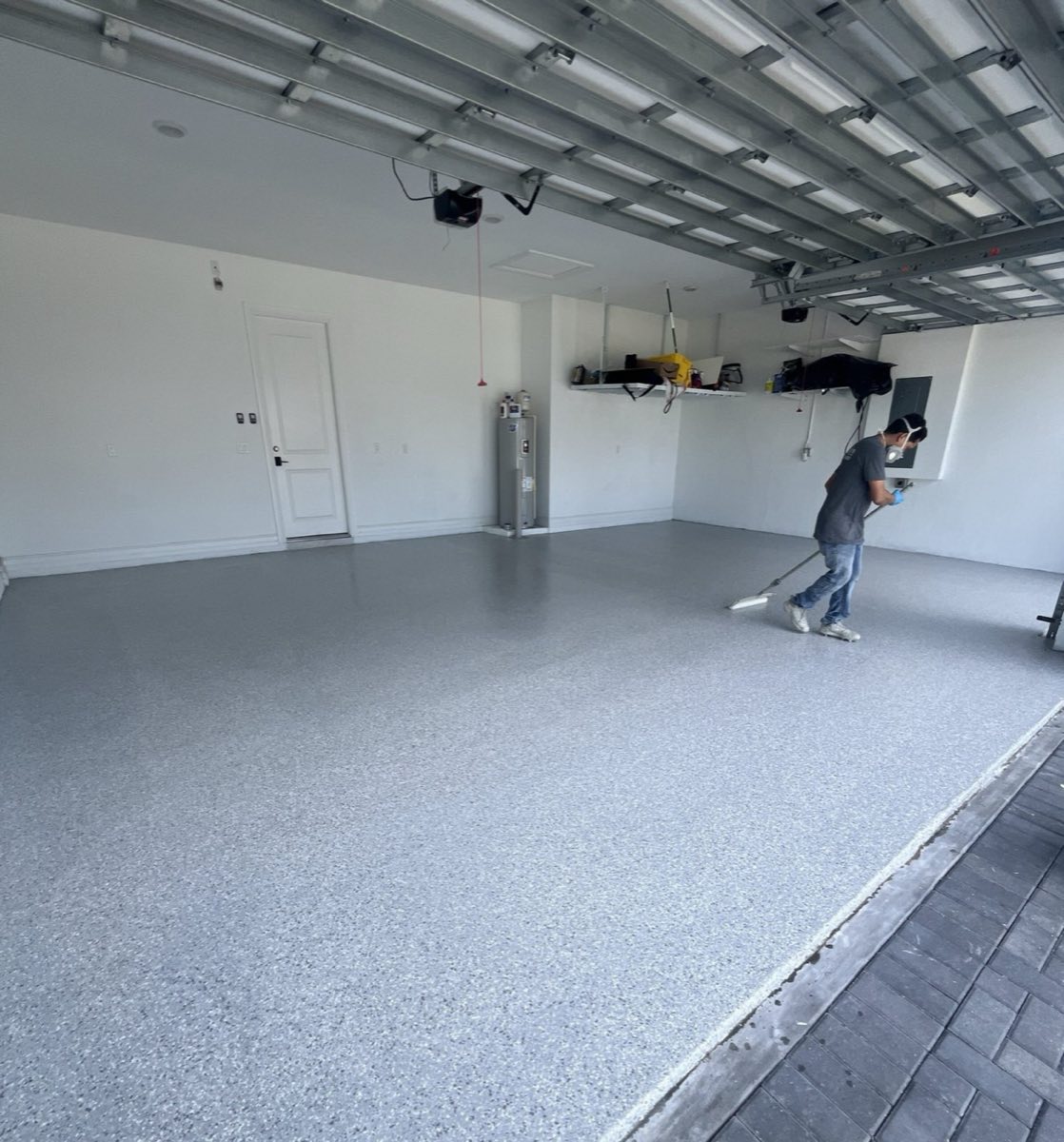
Urethane, polyaspartic, or straight epoxy.
Polyurethane sits between them. It cures slower than polyaspartic, so you give up a day, and in exchange you get the widest gloss and texture range, a very forgiving application window in humid weather, and the best combination of chemical resistance and flexibility in the group. On a Coral Way restaurant floor that sees citrus at the bar and hot water at close, or a terrace over living space where movement is a given, that combination is what we recommend. If your slab is dry, shaded, and interior, we will tell you the money is better spent on prep than on a topcoat you do not need.
Miami floors that ask for a urethane topcoat.
The project types where the topcoat pays for itself. If yours is not on this list, the walk-through may well point you at a simpler build.
Sun-exposed carports and aprons
Open carports, porte-cocheres, and the apron just outside a garage door take full sun for most of the day. This is where an epoxy-only floor gives itself away fastest, going amber near the opening while the shaded interior stays true. A urethane topcoat keeps the color even from the back wall to the street edge.
Terraces and pool decks
Coconut Grove terraces, rooftop decks, and pool surrounds near Biscayne Bay deal with sun, salt air, chlorine, and standing water after an afternoon storm. Urethane gives a slip-rated, UV-stable, waterproofed surface, and on terraces over occupied space we coordinate the topcoat with the waterproofing layer underneath so the assembly works as one system.
Restaurant, bar, and brewery floors
Kitchens and bars along Coral Way and through Wynwood run citrus, wine, beer, hot water, and heavy sanitizer over the same slab every night. Urethane resists the acid etching that dulls other finishes and takes a nightly mop without going soft. Cove base at the wall keeps the detail sanitary where the health code asks for it.
Garages that double as gyms
Scheduling a urethane coat around Miami weather.
So we work the calendar. Summer coats go down in the morning before the daily storm builds, or overnight when the dew point drops away from the slab temperature. We read the surface with a thermometer and a hygrometer before the first pass and hold if the numbers are wrong, because waiting two hours is cheaper than recoating a floor. On sealed interiors we run dehumidification during cure so the room, not the forecast, sets the conditions.
Moisture from below gets its own test. Miami sits on a shallow water table over porous limestone, so vapor drive through a slab is normal here, not exceptional. Before anything is coated we grind to open the surface and then run a calcium chloride or relative-humidity probe test to see what the concrete is actually giving off. If the reading is high, a moisture-mitigating primer goes down first. Skipping that step is the single most common reason a coating we did not install comes back up in sheets a year later.
- County
- Miami-Dade
- Best for
- Sun-exposed slabs
- Key factor
- UV + chemicals + movement
- Scheduling
- Morning or overnight
- Always first
- Slab moisture test
How a Miami urethane job actually runs.
Walk-through
Free and on site. We read the sun exposure, the chemicals, and the traffic, then check the joints and the existing finish.
Grind and test
Diamond-grind to profile, chase cracks, vacuum, then moisture-test the open slab and prime for vapor if the reading calls for it.
Body and topcoat
Epoxy or the chosen base goes down first, then the aliphatic urethane wear layer at your gloss level, with grit broadcast where slip matters.
Cure and handoff
Walk-on at 24 hours, back in service at 48. We leave care notes for the finish and come back at 30 days to look it over.
Other Suncrete coating systems.
Sixteen systems in the kit, and urethane is one of them. See the rest of what we install around Miami, or look through finished work in the project gallery.
What Miami clients ask us most.
Do I need a urethane topcoat if my garage is closed up?
Usually not. If the slab is interior, shaded, and the door stays down most of the day, an epoxy build with a good prep will hold its color for years. The topcoat earns its money when sun reaches the floor, when chemicals land on it, or when the space doubles as a gym. On the walk-through we will tell you straight if your floor does not need it.
Will the color really stay put in Miami sun?
The aliphatic urethane we use is formulated to hold its tone under UV, which is the specific weakness of epoxy. A sun-exposed floor will still show wear over time from traffic and grit, but it will not go amber and chalky the way an uncoated epoxy surface does after a couple of summers.
Can you coat during the rainy season?
Yes, with planning. We schedule summer work for the morning before the storms build or overnight when the dew point falls, take slab temperature and humidity readings before the first pass, and run dehumidification on sealed interiors. If the numbers are wrong at start time we hold rather than push a coat into bad air.
How do you check the slab for moisture first?
We grind the surface open, then run a calcium chloride or in-slab relative-humidity test to measure what the concrete is actually releasing. Miami sits on a shallow water table over porous limestone, so vapor drive is common. If the reading is high, a moisture-mitigating primer goes down before any coating.
Is polyaspartic a better choice for my garage?
Sometimes. Polyaspartic cures fast enough to take a car the same evening, which matters if you cannot give up the space. Urethane costs you a day of cure but gives a wider gloss range, a more forgiving window in humid weather, and excellent chemical resistance. We will lay out both against your actual downtime and let you pick.
Got a slab? Let’s pour it right.
Send a photo and rough square footage and you get a real quote back within 24 hours. No “starting at” numbers, no upsells at install. Polyurethane floors across Miami and greater Miami-Dade. Reach us any time through the contact page.
Ready to talk through your floor?
Diego and the crew will walk the slab with you, no obligation. Ten years of surface finishing behind every job across Miami and Miami-Dade County.