Polished concrete and sixteen floor systems. Picked to the slab, not the catalog.
Most contractors sell one system and force-fit every job into it. We lead with mechanically polished concrete, then carry the full range, grind-and-seal, urethane cement, polyurethane, urethane membrane, flake, metallic, quartz, and the walkthrough is where we decide which one belongs on your slab. Same install crew, same diamond-grinding discipline, every job.
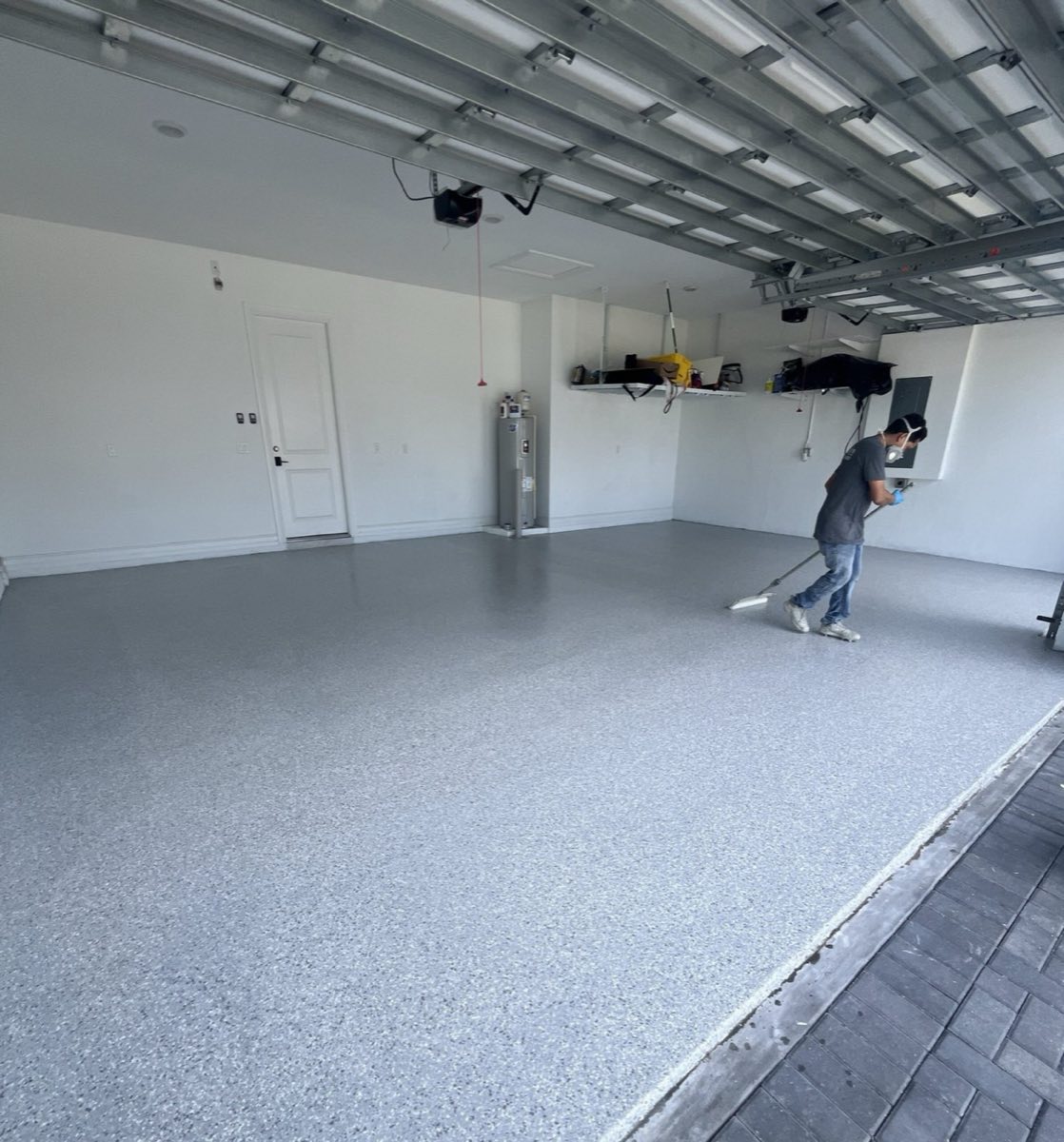
One system never solves every floor.
A polyaspartic that bulletproofs a Miami Beach garage will yellow on a south-facing balcony in eight months. A urethane cement that handles a commercial kitchen’s grease and acid wash will look industrial in a Coral Gables foyer. The right answer depends on UV exposure, foot traffic, slab moisture, chemical contact, slope, drainage, and what the floor needs to look like at the end.
That’s why we carry sixteen systems instead of one. The walkthrough is where we read your slab, moisture meter, crack inspection, existing-coating adhesion test, and recommend the system that’ll be flat at year ten, not just at handoff. You’re paying us to pick the right one, not just install whatever’s in the truck.
Every system below has been installed somewhere in South Florida for at least five years. We don’t experiment on your slab. If we recommend it, it’s because the same system is still flat on someone else’s floor across town.
Every coating system we install.
Grouped by what they’re built for. Click any system for the full breakdown, applications, prep specs, cure times, warranty.
Residential Garage Systems
South Florida garages. Walk-on 24h, drive-on 48h. UV-stable polyaspartic topcoats that survive direct sun.
Commercial & Industrial
Forklift-rated builds. Chemical resistance. Weekend-install scheduling so your shop never closes.
Outdoor & Balcony
UV-stable polyurethane and urethane membrane systems. Coastal-rated. Pool decks, terraces, high-rise balconies.
Specialty & B2B
Prep work for other coating installers. Self-levelers for compromised slabs. Sleeper systems for moisture problems.
The walkthrough is the most important part of the job.
Most contractors take a phone call and a square-foot number and quote you a system from a brochure. We don’t quote a system until we’ve walked your slab. Here’s what the walkthrough actually measures.
Moisture · cracks · prior coatings.
We bring a calcium-chloride moisture test and a crack-pattern survey. Slabs with active moisture above 3 lbs / 1000 sq ft / 24 hr need a vapor barrier or a sleeper system, coating directly over the slab will peel within a year.
Cracks under 1/16″ we chase with crack-fill epoxy. Cracks over 1/8″ with vertical displacement need slab repair before any coating. Prior epoxy that’s still adhered we either grind off mechanically or re-bond if it tests sound.
What’s the floor doing for a living?
A car-collector garage gets metallic. A daily-use family garage gets flake (chip texture hides dirt + scuffs). A commercial kitchen gets urethane cement with cove base. A south-facing patio gets polyurethane (UV-stable). A north-facing covered terrace can get polyaspartic.
This isn’t aesthetic, it’s about matching the system’s chemistry to the failure mode your floor will face. Wrong system + perfect install still fails at year 2.
Showroom vs. workhorse vs. invisible.
Once we know the slab and use case, we narrow to 2-3 viable systems. Then it’s your call on look + budget. Showroom metallic costs more than flake but doesn’t necessarily last longer, it just looks more dramatic.
We bring sample panels of every system on the table. You see the actual color depth + texture before committing. Most clients pick the one they thought was second-choice on the phone, the panel changes their mind.
What people ask before booking.
How do I know which system I need?
The walkthrough is where we decide. We bring a moisture meter, a crack-pattern survey checklist, and sample panels of the 2-3 systems we’d recommend for your slab + use case. Most clients arrive thinking they need metallic and leave with flake, or vice versa. The system has to match the slab and the use case, not the Pinterest board.
What’s the price range across these systems?
We send firm pricing after the walkthrough, never a “starting at” number.
How long do these systems actually last?
Properly-prepped polyaspartic garage floors run 10-15 years before any refresh. Urethane cement commercial kitchens run 15-20 years. Polyurethane patio coatings run 8-12 outdoors, 15+ indoors. Urethane balcony membranes carry a 10-year manufacturer warranty. The variable is always prep, a perfectly-prepped floor lasts the manufacturer’s spec; a shortcut-prepped floor fails at 18 months regardless of what’s on the can.
Do you work commercial weekends?
Yes. Most commercial installs run Friday evening through Sunday so the floor is drivable Monday morning. We bring our own generator, lighting, and HEPA-shrouded grinders so we can work after-hours without disrupting the building or neighboring tenants.
What if I don’t see my project type listed?
Call us. We’ve coated boat dock decks, gym free-weight zones, dental office floors, restaurant prep rooms, hangar floors, and food-processing kitchens. The sixteen systems above cover 95% of what comes through the shop, for the other 5%, we usually have a sub-grade or specialty manufacturer relationship that fits.
Can I see a sample before booking the job?
Yes. We bring physical sample panels (~12″x12″) of every system we’re recommending to the walkthrough. For metallic and decorative installs we also bring color-blend samples so you see the actual pigment movement, not just a chip card. No commitment required to schedule a walkthrough.
Don’t know which system fits? That’s our job.
Send a photo of the slab and the rough square footage, we’ll come back same-week with a walkthrough slot and our recommendation. No “starting at” pricing. No commission-driven upsells. Just the right system for your floor.
Ready to Get Started?
Contact Suncrete Coatings today for a free, no-obligation quote. We look forward to working with you.