Aventura’s high water table pushes water vapor up through concrete. If a coating goes on over a slab that reads high, the trapped vapor pressure lifts it, that is bubbling, peeling, and delamination. The fix is not a better coating, it is a moisture test before the job and a vapor-mitigation primer when the numbers call for it. Skip that step on the coast and the floor fails on schedule. Call (786) 488-5057.
The Failure Everyone Blames on the Coating
A floor bubbles, peels, or lets go in sheets, and the owner assumes the coating was bad. Usually it was not. On the coast, the most common reason a garage or interior floor fails is not the resin at all, it is water moving up through the slab underneath it. The coating was fine. The slab it went on was wet, and nobody checked.
This matters in Aventura more than almost anywhere in Miami-Dade, because Aventura sits low and right on the Intracoastal. Understanding the mechanism is the difference between a floor that lasts a decade and one that has to be ground off and redone a year after it went down.
Why the Water Table Is the Villain
Aventura is a coastal, low-lying city, and the groundwater sits close to the surface. Concrete is porous, so a slab poured over high groundwater is in constant contact with moisture from below. That water does not stay put. It moves upward through the concrete’s pore network and reaches the surface as vapor, day after day, for the life of the slab.
You cannot see it. The slab looks and feels dry to a hand, which is exactly the trap. A slab can pass every visual check and still be pushing significant moisture vapor through its surface, and that invisible vapor is what destroys a coating that was applied over it without a test.
How Vapor Actually Lifts a Coating
Here is the mechanism. You seal the top of a slab that is still emitting vapor from below. The moisture rising through the concrete now hits the underside of your new coating and has nowhere to go. It builds pressure against the bond line. That pressure does the damage: it pushes blisters and bubbles up under the film, breaks the adhesion between coating and concrete, and eventually delaminates the floor in sheets.
It is a slow-motion failure. The floor can look perfect for weeks or months while the pressure quietly builds, then bubbles appear, edges lift, and the coating peels. The owner sees a coating problem. What actually happened is that a wet slab was sealed shut, and the water pushed the floor back off. No brand of resin survives that if the moisture is not dealt with first.
The Test That Prevents All of It
The whole problem is preventable with one step: measure the slab before coating it. There are established ways to quantify how much moisture a concrete slab is emitting, and they turn an invisible risk into a number we can design around. We do not quote a coastal floor in Aventura without reading the slab, because guessing on this coast is how floors fail.
The reading tells us which path the job takes. A slab that reads low can take a standard system. A slab that reads high needs mitigation before anything decorative goes down. Either way, the test removes the gamble. It is a small, cheap step at the front of the job that decides whether the expensive part lasts, and skipping it to shave the quote is the false economy that fills our repair calendar.
What Vapor Mitigation Does
When a slab reads high, we install a vapor-mitigation primer, a specialized coating engineered to bond to the concrete and hold back the moisture vapor, before the base coat. It becomes a barrier between the wet slab and the decorative system, so the vapor pressure has somewhere to stop instead of pushing up against your finish.
With that barrier in place, the rest of the system, the base coat, the flake or metallic, the polyaspartic top, can be installed with confidence that moisture will not lift it later. Mitigation is not needed on every slab, which is exactly why we test rather than assume. We add it where the numbers call for it and skip it where they do not, so you pay for the protection your specific slab actually needs.
Prep Is Part of the Moisture Answer
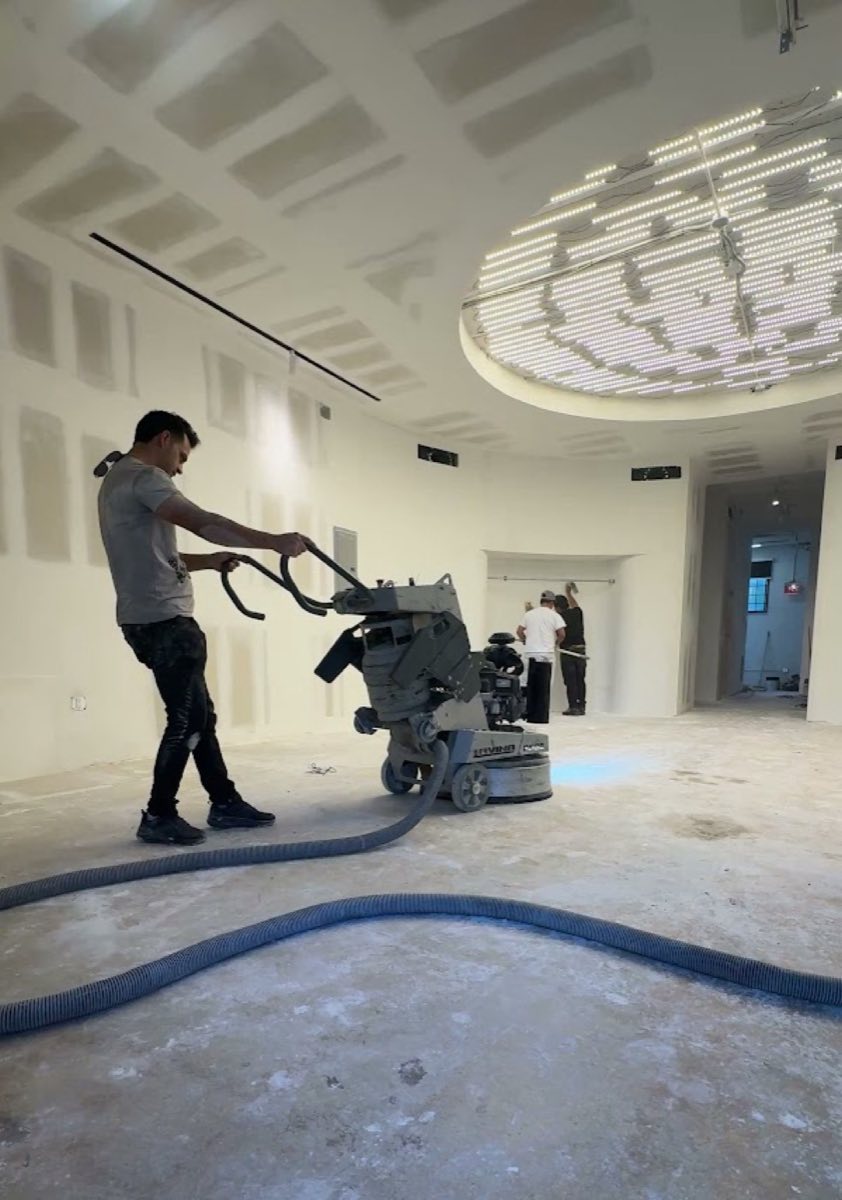
The bond starts with the grind. We diamond-grind the slab to open the concrete and give the coating, or the mitigation primer, a strong mechanical key to hold onto. A slick, unground slab is a weak bond even on dry concrete, and on a coastal slab that is fighting vapor from below, a weak bond is the first thing to go.
Grinding and moisture testing work together. The grind gives the system something to hold; the test tells us whether that system needs a moisture barrier under it. Do both, and even a slab over high Aventura groundwater carries a coating that stays put for years. Skip either one, and you are back to the failure this article opened with.
Old Slab, New Slab, Same Rule
This is not only an older-home problem. A brand-new slab in a new Aventura building can read high on moisture simply because it has not fully dried, and coating fresh concrete too soon traps that early moisture the same way. New construction gets the same test we give a thirty-year-old garage, because the water table does not care how old the concrete is.
The lesson holds across the board: on this coast, the slab decides the job, not the calendar and not the coating brand. Whether we are protecting a new penthouse, a mid-rise garage deck, or a townhome floor, the moisture reading comes first and the system follows from it. That order is why our Aventura floors stay down.
Do It Right the First Time
A coating that fails from moisture is not a cheap mistake. You pay to grind the failed floor back off, then pay again for the system that should have gone down the first time, this time with the test and the mitigation you skipped. Doing it right once is far cheaper than doing it wrong and over.
If you are coating a floor anywhere near the water in Aventura, insist on a moisture test, no matter who does the work. We build it into every quote as a matter of course. Call (786) 488-5057 and we will read your slab before we ever talk about color.
Aventura Slab Moisture FAQ
How do I know if my slab has a moisture problem?
You often cannot tell by looking, a slab can feel bone-dry and still emit significant vapor. The only reliable way to know is a moisture test, which we run before quoting any coastal floor in Aventura.
What actually makes a coating bubble and peel?
Vapor pressure. Moisture rising through the slab hits the underside of a sealed coating, has nowhere to go, builds pressure against the bond line, and pushes blisters up and the film off. It is a slab problem, not a resin problem.
Why is Aventura worse for this than inland areas?
Aventura is low-lying and sits right on the Intracoastal, so the groundwater is close to the surface. That keeps the slab in constant contact with moisture that moves upward through the concrete as vapor.
Does every slab need vapor mitigation?
No, and that is why we test instead of assume. A slab that reads low takes a standard system. A slab that reads high gets a mitigation primer before the base coat. You pay only for what your slab needs.
Can a new-construction slab still fail from moisture?
Yes. Fresh concrete has not fully dried and can read high, so coating it too soon traps that early moisture. We test new slabs the same way we test old ones before we coat them.
Can you fix a floor that already bubbled and peeled?
Yes. We grind the failed coating off, moisture-test the exposed slab, add mitigation where the numbers call for it, and reinstall the system correctly so it stays down this time.
Got a slab? Let’s pour it right.
Photo plus square footage equals a real quote in 24 hours. Serving Aventura and all of Miami-Dade, Broward, and Palm Beach.
Resurface My Floor → Call (786) 488-5057