Fort Lauderdale commercial floors.
Coatings and polished slabs for the warehouses, kitchens, clinics, and marine shops working Broward’s east side. We install on your hours, not ours.
- Serving
- Fort Lauderdale and east Broward
- Systems
- Epoxy, polish, flake, metallic, sealing
- Schedule
- Nights, weekends, phased by bay
- Walk-on
- About 24 hours after final coat
- Based
- Miami Beach, short run up the coast
- Quote
- (786) 488-5057
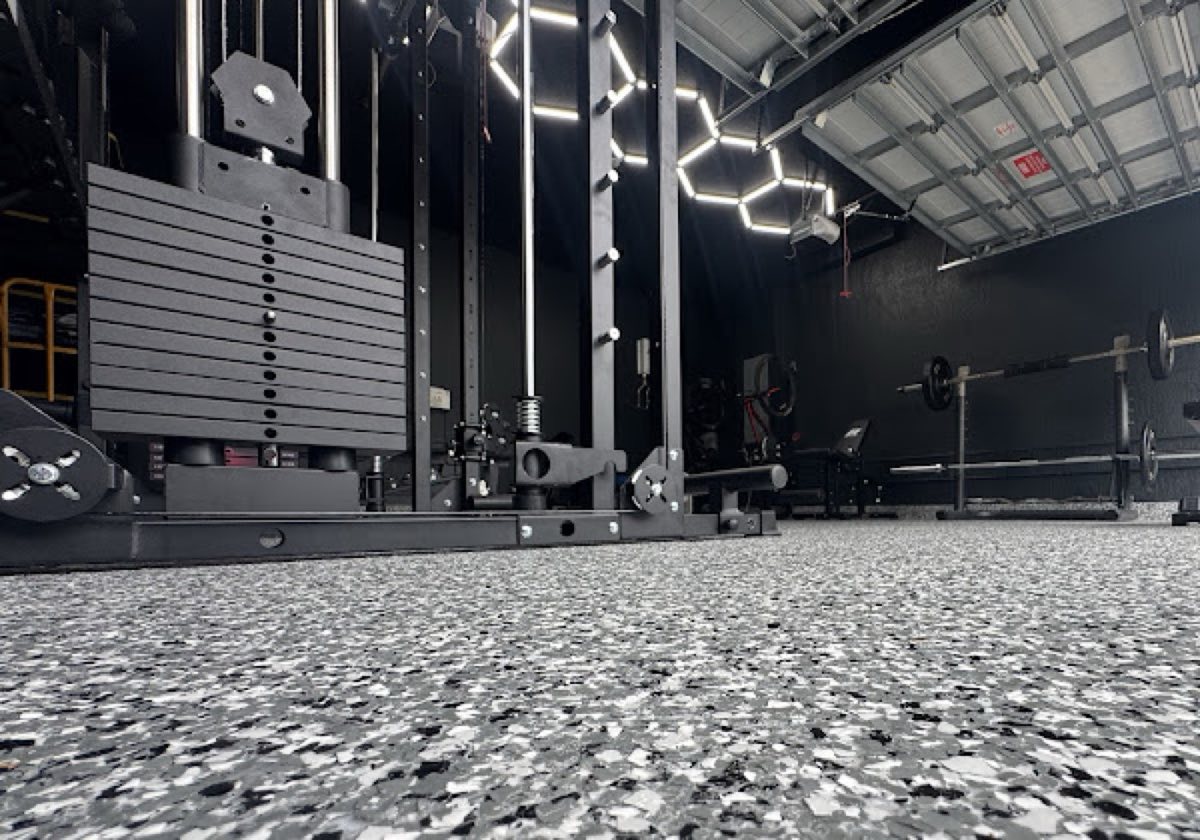
Salt air, sun, and a slab that never fully dries out
Three local conditions decide more about a Fort Lauderdale commercial floor than the brand of resin anybody quotes you.
The first is the water table. Broward sits close to the surface on porous limestone, and a lot of the commercial building stock east of I-95 went up before vapor barriers were routine. That slab is passing moisture upward, quietly, every day. Coat over it without reading it and the coating blisters, or lets go in sheets, usually inside the first wet season. We moisture-test every slab before anything gets mixed and again after grinding, because grinding opens the pores and changes the number.
The second is salt. If you are within a few blocks of the Intracoastal, the New River, or the port, salt air gets into the building, settles on the floor, and gets tracked and mopped around all day. It attacks bond lines and it eats anything with exposed metal in the assembly. That pushes us toward denser topcoats and toward sealing the transition points that most installers leave open.
The third is heat and light. A loading dock apron or a covered service bay in Fort Lauderdale takes UV load that a Midwest floor never sees. Straight epoxy ambers under that. We spec aliphatic urethane topcoats where sun reaches the floor and let the epoxy do its work underneath where it belongs.
Coverage across Fort Lauderdale.
We cover Fort Lauderdale and the surrounding trade area for every system in the kit, scheduled around your operating hours rather than ours.
Why Broward facility managers keep calling us back
Commercial flooring is a trust purchase. You are handing a contractor the room your business runs out of and asking for it back on schedule. Three things decide whether that goes well.
We read the slab before we quote
Every walkthrough includes moisture meter readings, a hardness check, and a look at your drains, joints, and thresholds. That is how a number stays a number.
We install on your clock
Restaurants get overnights between close and prep. Warehouses get split in halves so racking stays loaded. Clinics get weekends, exam room by exam room.
Ten years of stone work behind it
Suncrete came up through marble polishing before it ever mixed resin.
The systems we install across Broward
Commercial epoxy. The workhorse. High-build resin for warehouse aisles, production floors, kitchens, and back-of-house. Sized to the wheel loads and the chemicals, with cove base where health code wants it.
Polished concrete. Grinding and densifying the slab you already own into the finished floor. Showrooms, breweries, retail, distribution centers. Nothing to delaminate because there is no coating on top.
Flake epoxy. Chip broadcast into resin, sealed with urethane. Hides dirt and patch lines, adds traction, cleans fast. Locker rooms, service corridors, clinics, brewery taprooms.
Metallic floors. The finish that gets specified when the floor has to sell something. Hotel and restaurant interiors, showrooms, salons, lobbies, dispensaries.
Concrete sealing. Penetrating and film-forming sealers for warehouse slabs, plaza pavers, garage decks, and dock aprons that need protection without a full coating build.
Novolac epoxy. Acid and chemical resistant, for wash bays, charging stations, battery rooms, and anywhere aggressive chemistry hits the floor.
Urethane cement. Thermal-shock rated, for kitchens and processing rooms that take boiling water, steam, and kettle dumps.
Fort Lauderdale’s marine and hospitality floors
Two industries here have floor problems most contractors have never seen.
Marine is the first. Boatyards, service bays, canvas and upholstery shops, engine rooms, and dockside back-of-house along the New River and near the port all take a chemistry cocktail: diesel, hydraulic fluid, bottom paint, acetone, resin, and salt water, plus dropped tools and steel dollies. That is a Novolac or high-build epoxy conversation with an aggressive traction profile, not a decorative one.
Hospitality is the second. A Las Olas kitchen takes fryer oil, citric acid from produce prep, sanitizer, and a hot washdown every single night, then a health inspection whenever the county decides. Cove base is not optional there, and neither is anti-slip in the dish pit and the walk-in approach. Meanwhile the dining room forty feet away needs a floor guests find attractive. Two systems, one building, one night crew.
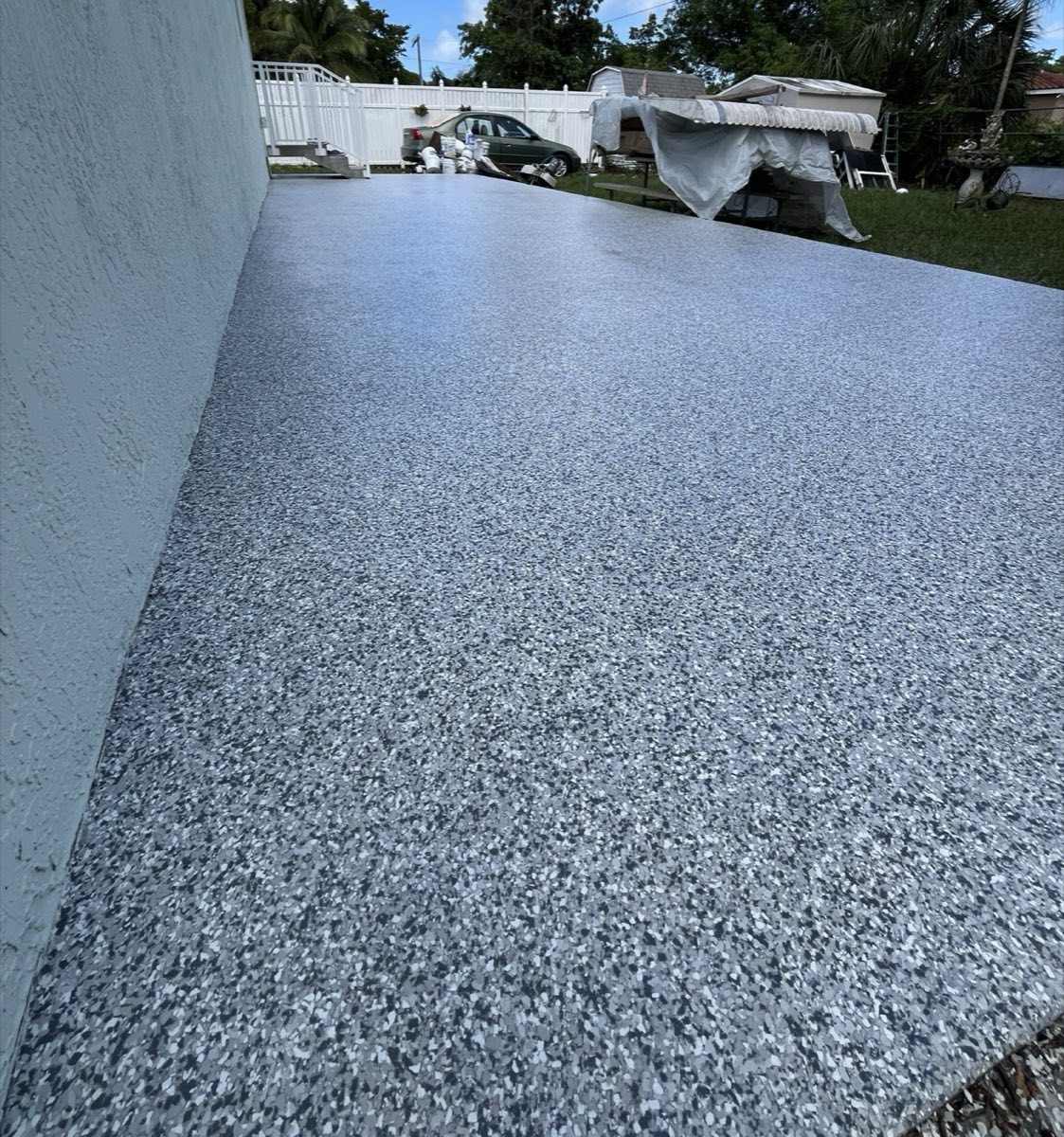
The Fort Lauderdale districts we work in most
Broward’s east side changes character every few blocks, and so does the floor spec. These are the corridors where our trucks spend the most time.
Downtown and Las Olas
Hospitality and professional space, where one building often needs two systems. The kitchen wants cove base, drains cut in, and traction in the dish pit. The dining room forty feet away wants a finish guests notice. Dental suites and med spas along the same blocks want seamless and disinfectant-tolerant.
Flagler Village and FAT Village
Old industrial slabs carrying new customer-facing expectations. These buildings polish beautifully once we pull the mastic and old coating shadows, and tenants here usually want the real concrete rather than something imitating it. Taprooms, galleries, coworking floors, and studios.
Andrews Avenue and Executive Airport
True light industrial and our steadiest work. Machine shops, distributors, contractor yards, and fleet bays running pallet jacks and forklifts across slabs that were poured for load and not much else. High-build epoxy with striping laid into the coating, or polished concrete where the traffic is clean.
Port Everglades and 17th Street
The corridor that keeps Novolac on our truck. Boatyard service bays, engine rooms, canvas and upholstery shops, and dockside back-of-house all take diesel, hydraulic fluid, acetone, bottom paint, and salt water in the same week.
What a coastal county does to a commercial slab
Broward is a hard place to own concrete, and most of the reasons are invisible from standing height. The county sits on porous limestone with the water table close under it, so slabs pass vapor upward all day long. A great deal of the commercial stock east of I-95 went up before vapor barriers were routine practice, which means the building you are standing in is quietly pushing moisture at the underside of whatever you put down.
Then salt does the slower work. Within a few blocks of the Intracoastal, the New River, or the port, chloride gets into the building on shoes and tires, settles, and gets mopped around daily. It goes after bond lines and anything metal in the assembly, so near the water we spec denser topcoats and seal the transitions most crews leave open. Sun does the rest, ambering standard epoxy anywhere daylight reaches a dock apron or an open bay.
- County
- Broward
- Best for
- Commercial buildings east of I-95
- Key factor
- Slab moisture and salt exposure
- Typical job
- Warehouse, kitchen, clinic, or marine bay
How a Suncrete job runs from call to handoff
Walkthrough
Usually the same week you call, at no cost. We meter the slab, check hardness, read your drains and joints, and ask what your crew cleans with.
Written number
A real quote in about 24 hours. Mitigation, removals, and repairs are line items in it, never a discovery once the crew opens the room.
Install window
Nights, weekends, or phased bays, scheduled backward from the date your equipment goes back down rather than forward from our start.
Handoff and check-in
Cure times in writing, cleaning products named, and a return visit at 30 days to look at how the floor is wearing under your actual traffic.
Other Suncrete coating systems.
The right system depends on the slab and the room. We will not force-fit one when another lasts longer in that space.
What facility managers ask us first.
Which floor system should a Fort Lauderdale warehouse get?
Depends on what rolls across it. Standard forklift and pallet-jack traffic on a decent slab usually points to polished concrete, because there is no coating to delaminate and the finish gets harder over time. If the floor takes chemical spills, oil, or needs color-coded aisles and safety striping, high-build commercial epoxy makes more sense. We measure the slab hardness and read your traffic before recommending either one.
Can you work around our business hours?
Yes, and most Fort Lauderdale commercial jobs we do run that way. Restaurants get overnight installs between close and prep. Warehouses get phased in halves so shipping never stops. Clinics and offices get weekends. We bring our own generator, lighting, and vacuum-shrouded dust extraction, so the tenants next door and your shared HVAC never know we were there.
Does salt air near the port and Intracoastal really affect a floor?
It does, more than most people expect. Salt gets tracked in, settles, and gets mopped around daily, and it attacks bond lines and anything metal in the assembly. Near the water we spec denser topcoats and seal the transitions and edge terminations that installers usually leave open. It is a detailing difference more than a product difference, but it decides how long the floor lasts.
Our slab is from the seventies. Is it worth coating?
Usually yes, and often it is the better slab. Older Fort Lauderdale commercial pours tend to be thick and well cured. The catch is that they predate routine vapor barriers, so they pass moisture. We test before and after grinding and prime for the reading. Cracks, spalls, and old mastic all get repaired first. A properly prepped older slab outperforms a rushed new one.
How fast can we get back to work after the floor goes down?
Foot traffic at roughly 24 hours after the final coat. Racking, pallet jacks, rubber mats, and rolling equipment wait 48 to 72. Setting a loaded rack leg or a rubber runner on a green floor leaves a permanent dent or a bond-breaking print, so we schedule backward from when your equipment goes back down, not from when we finish coating.
Got a slab? Let’s pour it right.
Photo plus square footage plus what happens in the room equals a real quote in 24 hours. Commercial flooring across Fort Lauderdale and the surrounding area, on your hours.
See the work first
Finished commercial floors from across South Florida. Have a look, then tell us about your room.