Hialeah Gardens slabs, back to bare concrete.
Diamond grinding for tenant buildouts, retail shells and shop floors. Old paint, failed coatings, carpet glue and thinset come off, and you are left with clean, open concrete ready for the next floor. HEPA dust extraction runs the whole time, so a finished room stays finished.
- Service
- Concrete grinding
- Removes
- Paint, coatings, glue, thinset
- Dust
- HEPA extraction
- Edges
- Hand grinder
- Leaves
- Profile matched to the next system
- Quote
- (786) 488-5057
Everything else stands on the grind.
Almost every coating failure we get called out to fix started with prep. Somebody rolled epoxy over a slab that had only been swept, or acid washed, or still carried a layer of old sealer, and the new floor had nothing to grab. It looked fine for a while. Then the traffic and the humidity pulled it loose in sheets, and the owner paid twice.
Grinding is how we keep that from happening on our jobs. A planetary diamond grinder cuts the top of the slab down to clean, sound concrete and opens the pores so primer can soak in and bond. The same machine strips whatever the last tenant left behind. It is the first step on every coating and every polish we install, and we also run it as a job on its own for general contractors and property managers getting a space ready.
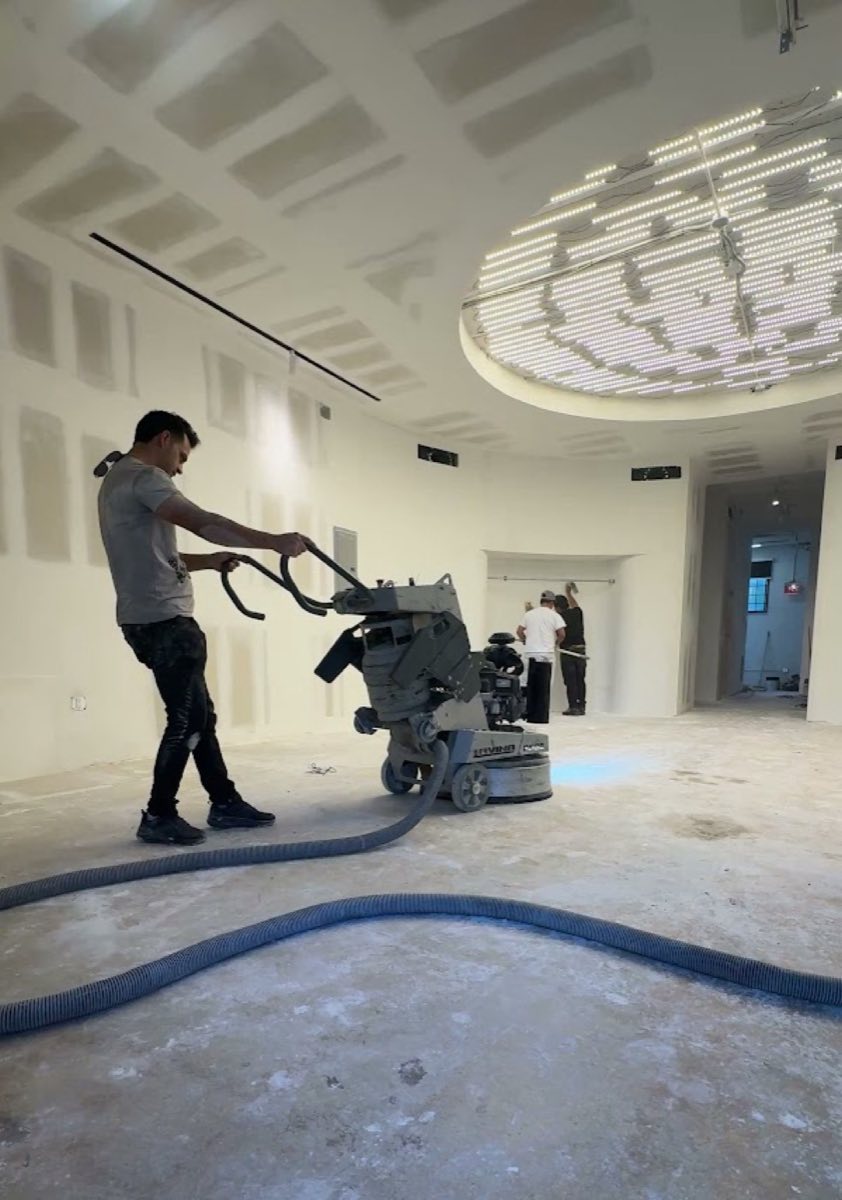
The photo shows a typical buildout: drywall hung, the ceiling finished and lit, and the slab still bare. That is the toughest place to grind, because the finishes are already in and any dust that escapes lands on somebody else’s fresh paint.
On a coating job the grind is ours to plan, and it comes bundled with the floor. When a general contractor or a landlord calls for grinding alone, we ask what is going down next and who is installing it. That answer sets the tooling, how deep we cut and how the slab gets left for the next crew.
A grinder and a HEPA vacuum on the weekly route.
Hialeah Gardens is next to Hialeah and on our crew’s route every week, so we can usually walk a buildout within the same week and slot the grind into the construction schedule. We cover the whole city. The installers running the grinder are our own and never subcontracted. You can see bare and finished slabs in the photo gallery, and the Hialeah Gardens overview has the rest of what we install in the city.
Keeping a finished buildout clean.
Grinding in an empty shell is simple. Grinding in a space with new drywall, painted walls and a finished ceiling takes a different setup, and we bring that setup to every job by default.
Extraction at the head
Every grinder runs connected to a HEPA dust extractor, with a shroud around the diamonds so dust gets pulled off right where the cutting happens. The air stays clear enough for other trades to keep working nearby.
Hand work at the edges
Walls, corners, door frames and columns get finished with a hand grinder, also on extraction. The big machines cannot reach those spots, and edges are where a new coating lifts first when someone skips them.
Cleanup before we leave
The slab gets vacuumed, the debris is bagged and hauled, and the room is left ready for the next trade or the next coat. You get the space back without a film of concrete dust settling on the new paint.
What comes off before the new floor goes on.
Each leftover needs its own approach. Telling us what is on the slab, or sending a photo of it, lets us show up with the right tooling the first time.
Old paint and failed coatings
Peeling epoxy, worn floor paint and flaking sealers come off with aggressive diamonds. Thick, well-bonded coatings take extra passes, and we plan time for that so no islands of old film get left behind.
Carpet glue and tile mastic
Adhesives gum up ordinary tooling. We switch to diamonds made for soft, sticky material so the glue comes off the slab clean, which matters a great deal when a coating is the next thing going down.
Thinset and tile remnants
After the tile is demolished, the thinset ridges stay stuck to the slab. Grinding them down flat is slow, careful work, and it decides whether the next floor sits level or telegraphs every old trowel line.
Retail and office shells
Second-generation spaces often carry a patchwork of all three from earlier tenants. We map what sits where during the walkthrough and clear the lot before the next trade arrives.
Tooth for a coating, flat for a polish.
Grinding can leave several different surfaces, and the right one depends on what goes on top. An epoxy, novolac or flake system needs tooth: an open, slightly rough profile the primer can lock into. Grind too fine and the coating sits on a smooth face with nothing to hold. The coating manufacturer specifies the profile, and we grind to that spec.
Polished concrete wants the opposite. It needs a flat cut, ground level and refined, because every high spot and dip shows up once the shine comes in. So before a diamond touches the slab, we need to know where the job is headed. If you are still deciding between a coating and a polish, the walkthrough is the place to settle it.
The grinder also turns up things nobody could see before. Soft spots in the concrete, cracks hidden under glue, patches that never bonded and moisture pushing up through an old slab all show once the surface is open. When that happens we stop, show you, and adjust the plan. A moisture reading picks the primer, and cracks get chased and filled. More on the tooling and the process is on our concrete grinding page.
- Epoxy, novolac
- Open profile with tooth
- Flake systems
- Open profile with tooth
- Polished concrete
- Flat, refined cut
- Floor paint
- Cleaned, lightly profiled
- Moisture
- Metered once the slab is open
How the strip-out runs in a tenant space.
Walk and sample
We see what is on the slab, check how well it is bonded, and agree on the target profile with you or the general contractor.
Protect and set up
Extractors, power and lighting go in. Openings to finished rooms get closed off with plastic and the work area is marked.
Grind and hand work
Planetary grinder across the field, hand grinder at the edges, columns and corners, everything running on HEPA extraction.
Inspect and report
We vacuum, look over the open slab for cracks, soft spots and moisture, and tell you what we found before the next step.
The floors that follow the grinder.
Grinding is usually the opening act. These are the systems we install on a Hialeah Gardens slab once it is open and clean.
Questions from contractors running a buildout.
Will grinding fill the space with dust?
No. Every grinder runs on a HEPA dust extractor with a shroud around the diamonds, and the edge work runs on extraction too. Finished walls and ceilings stay clean, and other trades can usually keep working in the next room while we grind.
Can you remove carpet glue and thinset?
Yes. Adhesives and thinset each get their own tooling. Glue needs diamonds that will not clog and smear it across the slab, and thinset ridges get ground down flat so the new floor sits level. Tell us what was there before and we will bring the right setup.
Is grinding better than acid etching?
For a coating that has to stay bonded, yes. Etching does not remove old paint, sealers or glue, and it can leave residue behind in the slab. Grinding takes off the contaminated surface and leaves the open profile the primer was designed to grip.
What if you find damage under the old floor?
We stop and show you. Cracks get chased and filled, soft areas get repaired or flagged, and a moisture meter reading tells us which primer the next system needs. The plan changes based on what the open slab shows, and you hear about it first.
Can you grind a slab for another flooring installer?
Yes. We grind as a standalone job for general contractors and property managers. Give us the profile the next installer needs, or the product sheet for their system, and we will grind to it and hand the space over clean.
Tell us what is stuck to the slab.
Paint, glue, tile, an old coating that is half off: send a couple of photos and the square footage, and say what floor goes down afterward. A real quote comes back inside 24 hours, and the walkthrough can usually happen that same week. Call (786) 488-5057 with a schedule question, or send the details through our contact form.