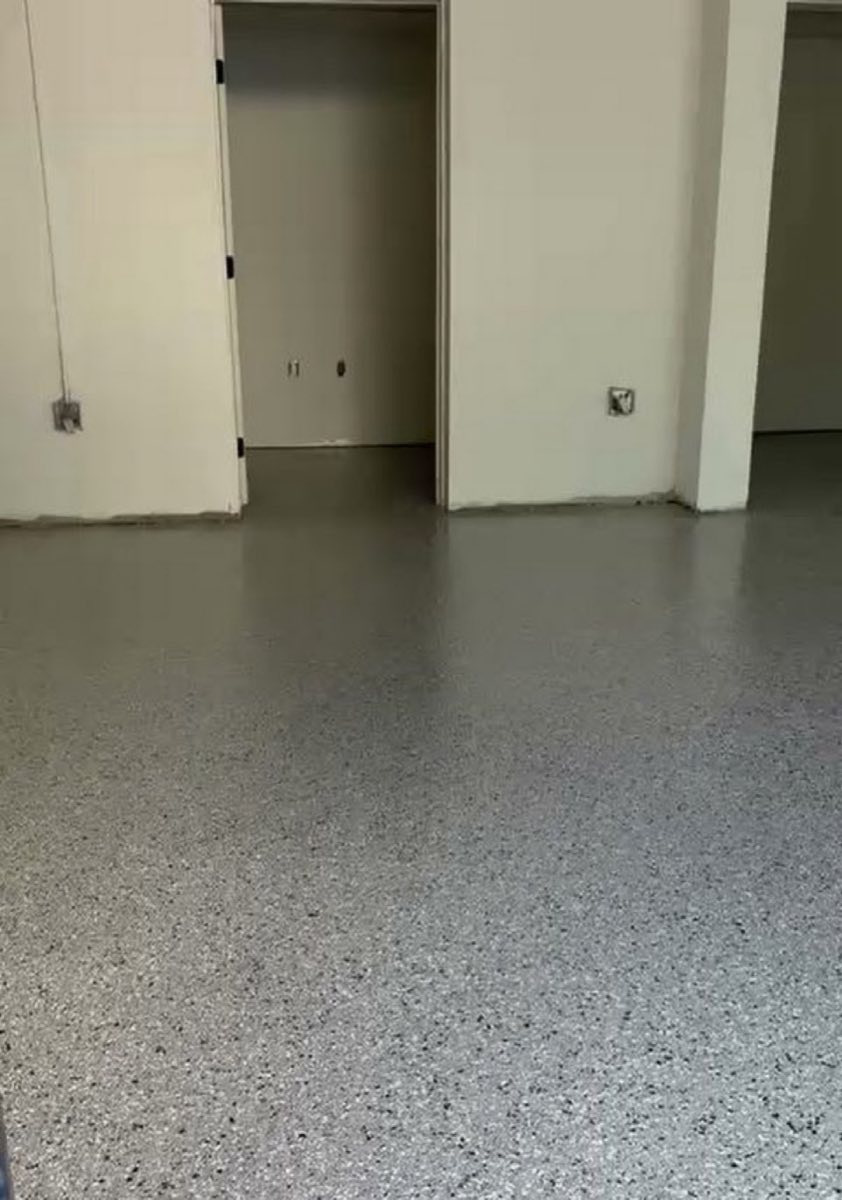
In South Florida, a flake or solid garage floor sits at the entry tier, metallic runs higher because it is hand-troweled, and repairs or heavy moisture mitigation add on top. Prep condition, system choice, and slab size move the number. The cheapest quote almost always skips diamond grinding.
Price Per Square Foot by System
A diamond-ground flake or solid-color system with a polyaspartic topcoat is the baseline for most South Florida garage floors. Metallic epoxy runs higher, because it is hand-troweled and labor-intensive.
A typical two-car garage is 400 to 500 square feet, and a flake system on that footprint lands in the everyday working range for the market. These are honest ranges, not teaser pricing. The exact number comes from the walkthrough.
What Drives the Number Up
Slab condition is the biggest variable. Oil-soaked concrete, spalling, or large cracks add prep time. Heavy moisture readings may require a vapor-mitigation primer, which adds cost but prevents the floor from failing.
Finish complexity matters too: a solid color is the floor of the line, flake adds a broadcast step, and metallic adds artistry and time. Bigger and simpler is cheaper per foot; smaller and detailed is more.
Why the Cheapest Quote Costs More
The lowest quotes in South Florida almost always assume acid-etch prep and a single water-based coat. That floor looks great for a year, then peels, and you pay again to grind it off and start over. The cheap floor becomes the most expensive one.
When you compare quotes, ask one question: are you diamond grinding, and what is the topcoat? If the answer is acid etch and plain epoxy, the low price is the warning sign, not the deal.
What Is Included in Our Number
Our quotes include diamond grinding to a CSP 2-3 profile, full crack chase and fill, moisture testing, the full primer-to-topcoat system, and the polyaspartic wear coat. No ‘starting at’ pricing and no day-of upsells.
We quote from a photo and square footage within 24 hours, then confirm on a free on-site walkthrough before any work is scheduled.
A Real Quote, Line by Line
When our number arrives, here is what is inside it. Mobilization and protection: masking, containment, and getting machines to your slab. Prep: diamond grinding the full floor, edge grinding at the walls, crack chase and fill, and the moisture test. Materials: primer, base coat, the decorative layer you picked, and the polyaspartic topcoat, all at the coverage rates the manufacturers publish rather than stretched thin. Labor: a crew that does this every day, and a 30-day return visit baked in.
What is not inside it: an allowance for surprises we should have caught. The walkthrough exists so the number you sign is the number you pay. In ten years the quotes that moved after signing have been the ones where a slab hid something genuinely invisible, and even then we call before we touch anything.
Where Homeowners Can Save Honestly
There are legitimate ways to bring the number down. Clear the garage yourself before we arrive instead of paying for the crew’s time. Choose a standard flake blend over a custom mix, the difference is purely aesthetic. Coat the main field and skip built-in cabinets’ footprints if they are never moving. Bundle the garage with a patio or walkway while the equipment is already mobilized, the second surface always prices better than a separate trip.
The places not to save: the grind, the moisture test, and the topcoat. Those three are the floor. Everything else is decoration on top of them, and every cheap floor we have ever torn out saved money on exactly those three line items.
How 2026 Pricing Compares to Past Years
Resin chemistry costs have crept up over the past few years along with everything else in construction, but install pricing in South Florida has stayed surprisingly stable because the market is competitive and crews have gotten faster. What has changed is the spread: the gap between the bottom-feeder quote and the proper install has widened, because cheap operators cut deeper as their material costs rose.
That makes the comparison-shopping question more important than it used to be. Two quotes with a wide gap between them are usually describing two different floors, not two prices for the same floor. Ask both contractors to write down their prep method and their topcoat chemistry, and the gap will explain itself.
Three Quotes, Three Different Floors: a Worked Example
Here is a real comparison from a Pembroke Pines two-car garage this spring, 460 square feet. Quote one, the cheapest: acid-etch prep, two coats of water-based epoxy, no topcoat named. Quote two, the middle number: diamond grind, full flake broadcast, polyaspartic topcoat, moisture test included. Quote three, the highest: the same scope as quote two plus a vapor-barrier primer the slab had not tested as needing.
Quote one is a 2-year floor once you divide its price across its short life, and that is before paying someone to grind it off. Quote two lasts 12-plus years, so its cost per year of life is a fraction of the cheap floor’s. Quote three is quote two plus a layer of insurance the moisture meter said was unnecessary, well-meaning, but you are buying protection the slab did not ask for.
The homeowner took quote two, and that is almost always the right answer: the full system, specified to what the slab actually tests at, from someone who showed you the readings. Cheaper than that buys a redo. More expensive than that should come with a reading that justifies it.
Questions Worth Asking Every Bidder
Put the same five questions to everyone who quotes you: What prep method, and to what surface profile? Will you moisture-test, and do I see the reading? What is the topcoat chemistry by name? What is the total dry-film thickness of the system? And who comes back if something looks wrong at day 30?
A professional answers all five in a minute and usually enjoys being asked. A salesman changes the subject to a discount that expires today. The answers matter less than how the answers arrive, and either way you will know more about your bidders than any review page can tell you.
Financing the Decision
Think in cost per year, not cost today. A professional floor that lasts 12 years spreads its price across those years into a small annual number. A cheap kit that fails in 2 costs several times more per year of life, before you add the cost of grinding it off. The durable floor is cheaper on every honest measure.
Want a real number for your garage? Send a photo and the square footage, or call (786) 488-5057 and we’ll walk you through it.
Pricing FAQ
How much is a two-car garage floor?
Most two-car garages (400 to 500 sq ft) sit at the entry tier for a diamond-ground flake system with a polyaspartic topcoat. Metallic costs more. Send a photo and square footage for a real number.
Why is metallic more expensive?
Metallic epoxy is hand-troweled and artistic. Each floor is unique and takes more labor than a broadcast flake floor, so it prices above the flake tier.
Do you charge for the quote?
No. We quote from a photo and square footage within 24 hours and confirm with a free on-site walkthrough.
Will moisture mitigation add a lot?
It adds cost only if the slab tests high. We moisture-test first, and a mitigation primer is far cheaper than a floor that fails from vapor pressure.
Is the polyaspartic topcoat included in the price?
Yes. Every quote includes the full system through the polyaspartic wear coat. There are no day-of upsells.
Can I do half the garage now and half later?
We do not recommend it. The seam never disappears, and mobilizing twice costs more than the savings. Bundling other surfaces into one visit is the better way to stretch the budget.
Got a slab? Let’s pour it right.
Photo plus square footage equals a real quote in 24 hours. Serving Miami-Dade, Broward, and Palm Beach.
Resurface My Floor → Call (786) 488-5057